

.webp)


.svg)

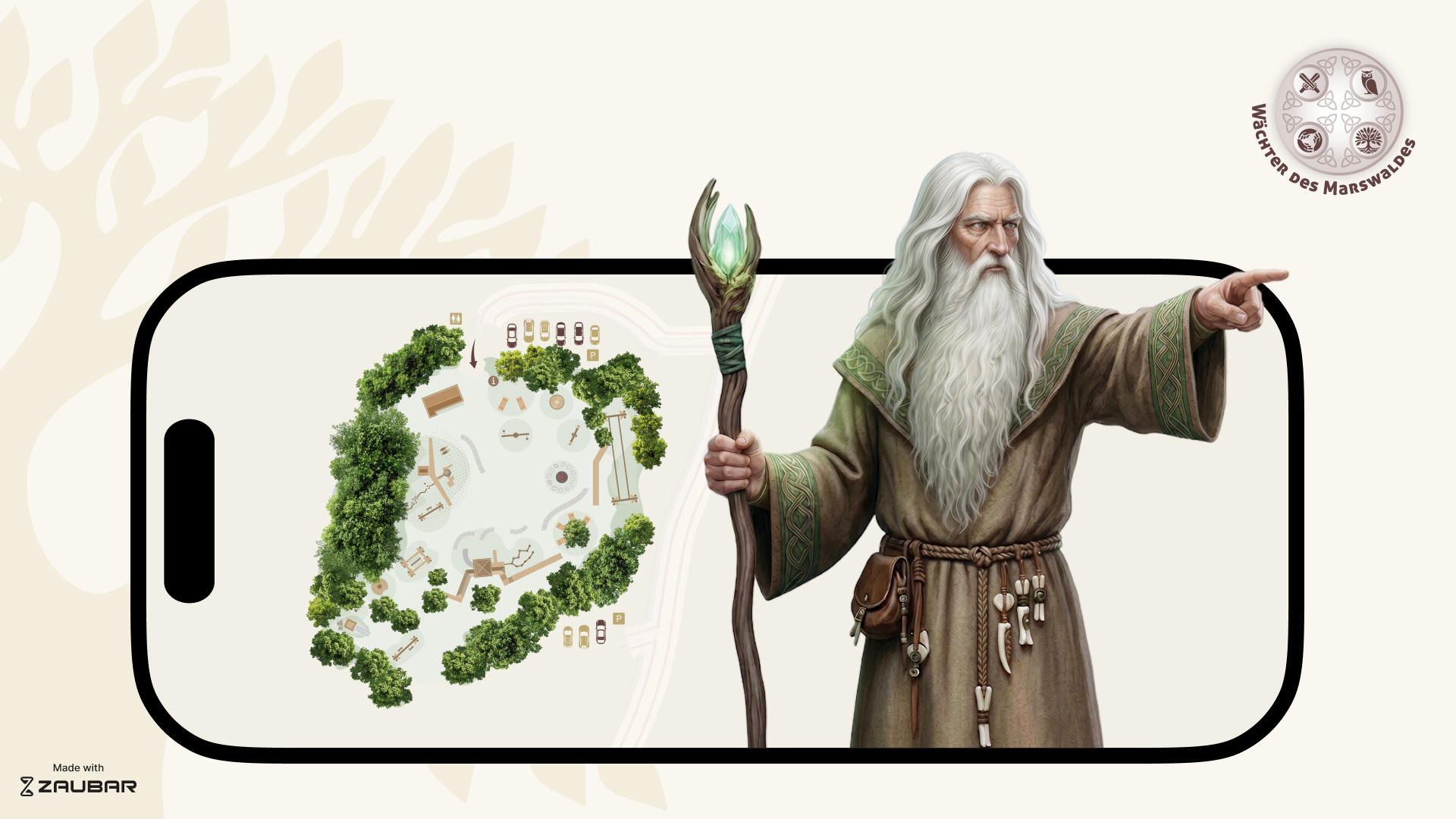
At the Marswald forest near Knetzgau in Franconia, regional history has moved beyond traditional information boards. Located on the Kelten-Erlebnisweg, a historic hiking trail connecting Thuringia and Bavaria, this area was already more than 2000 years ago a significant center of Celtic civilization. With the interactive AR project "Wächter des Marswaldes" (Guardians of the Mars Forest), the local municipalities and ZAUBAR have converted this landscape into a location-based digital experience.
Visitors at the Marswaldspielplatz, situated near the ancient Knetzberge settlement, use their smartphones to reveal a digital layer of history. The project uses Augmented Reality to visualize Celtic culture and heritage directly on-site, turning the forest into a space for interactive learning.
Digital Integration in a Natural Landscape
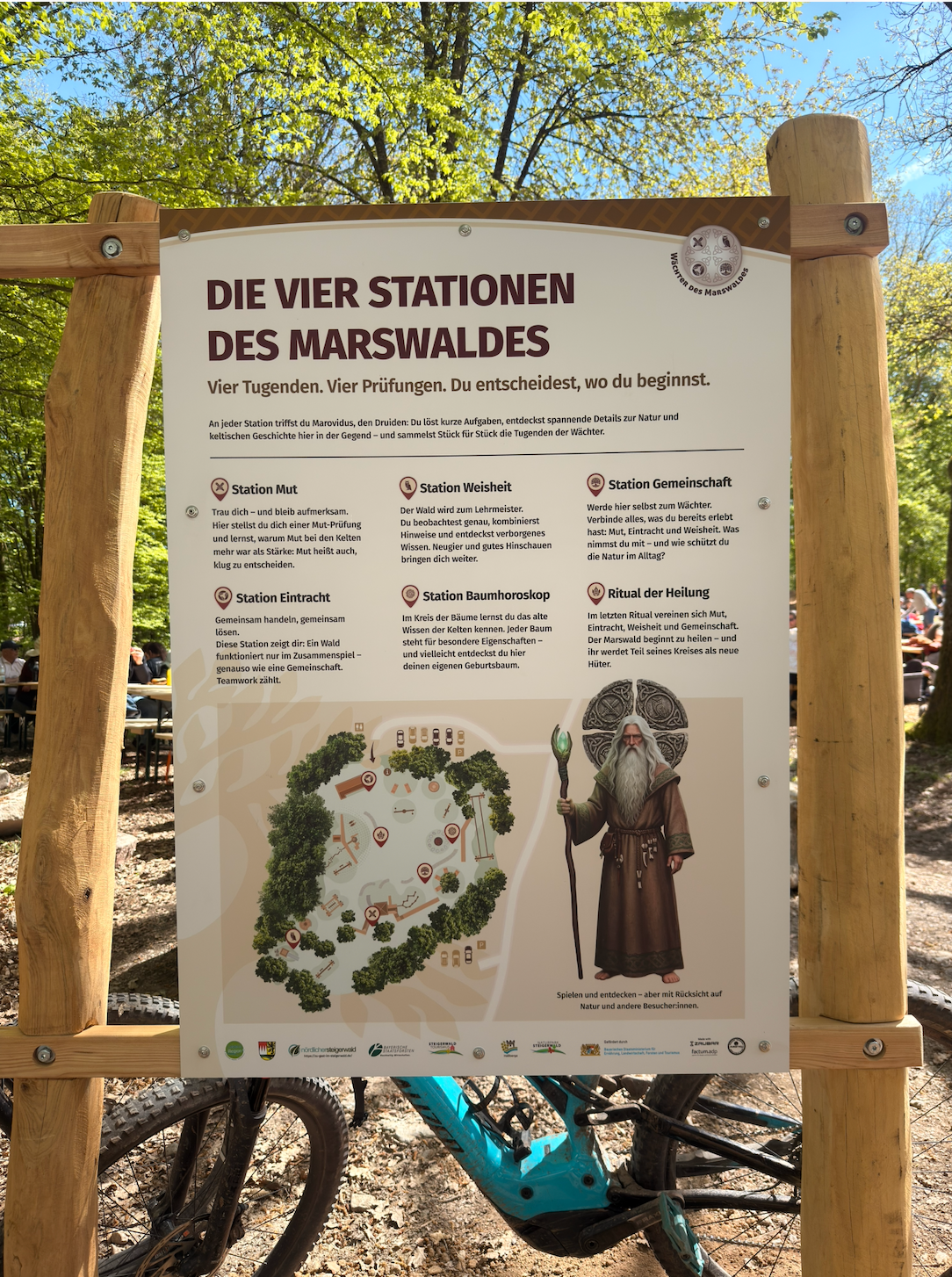
The experience begins at the entrance to the Marswald forest. By scanning a QR-code marker, visitors activate the app, which serves as a navigational and educational tool. From this point, the smartphone functions as a spatial interface, anchoring 3D content and narratives to the specific geography of the Steigerwald.
The tour is structured around four physical stations, each focusing on a specific Celtic virtue: Courage, Unity, Wisdom, and Community. This is not a passive viewing experience; the AR scenes are pinned to the terrain, requiring visitors to move through the environment to unlock new chapters of the narrative.
Marovidus and the Virtue-Based Gameplay
The central figure of the experience is Marovidus, an AR-animated Celtic Druid. Rather than providing a standard audio guide, Marovidus acts as a pedagogical mentor. At each station, he provides historical insights into the transition from the Bronze to the Iron Age, regional trade, and Celtic social structures.
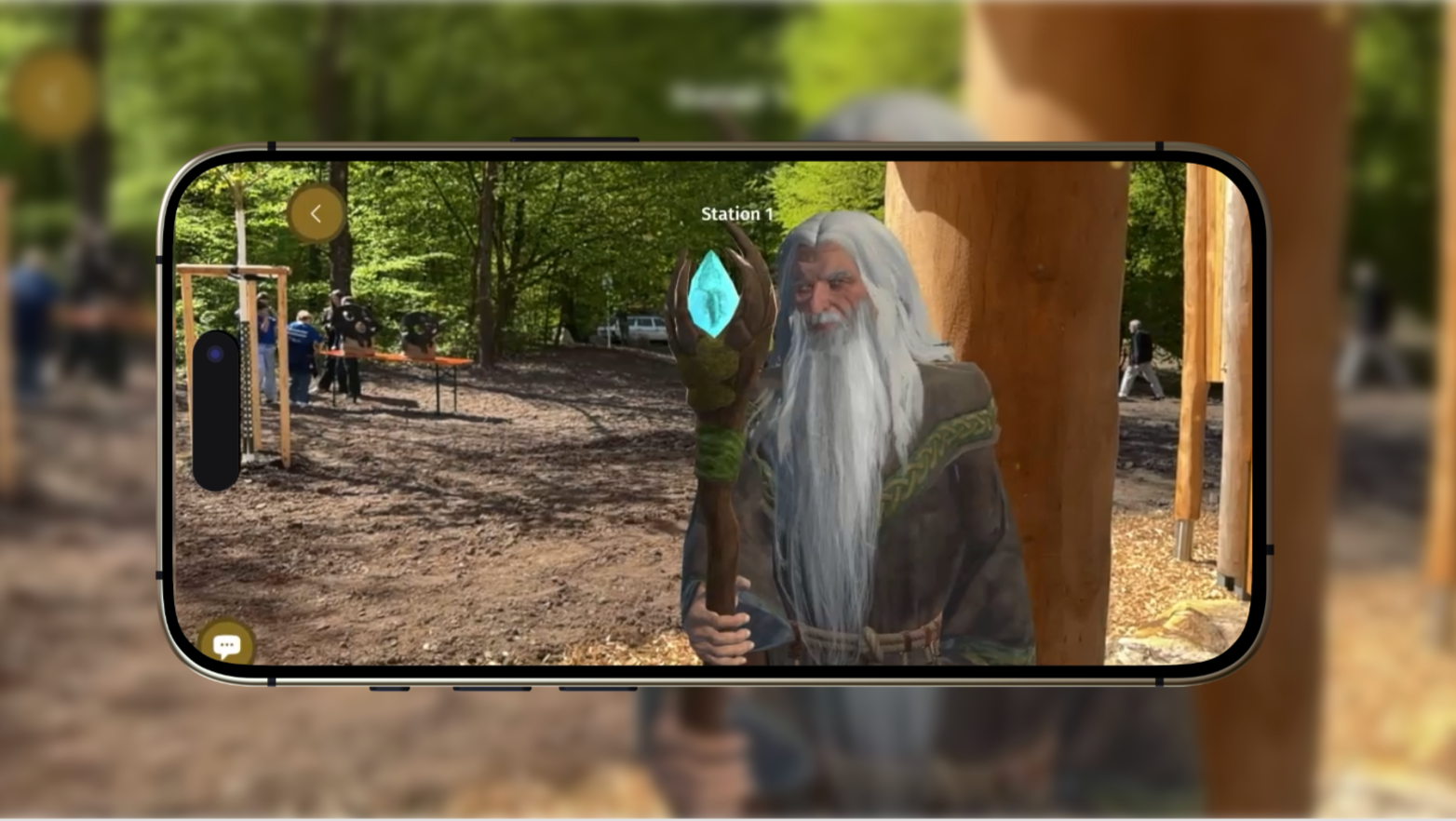
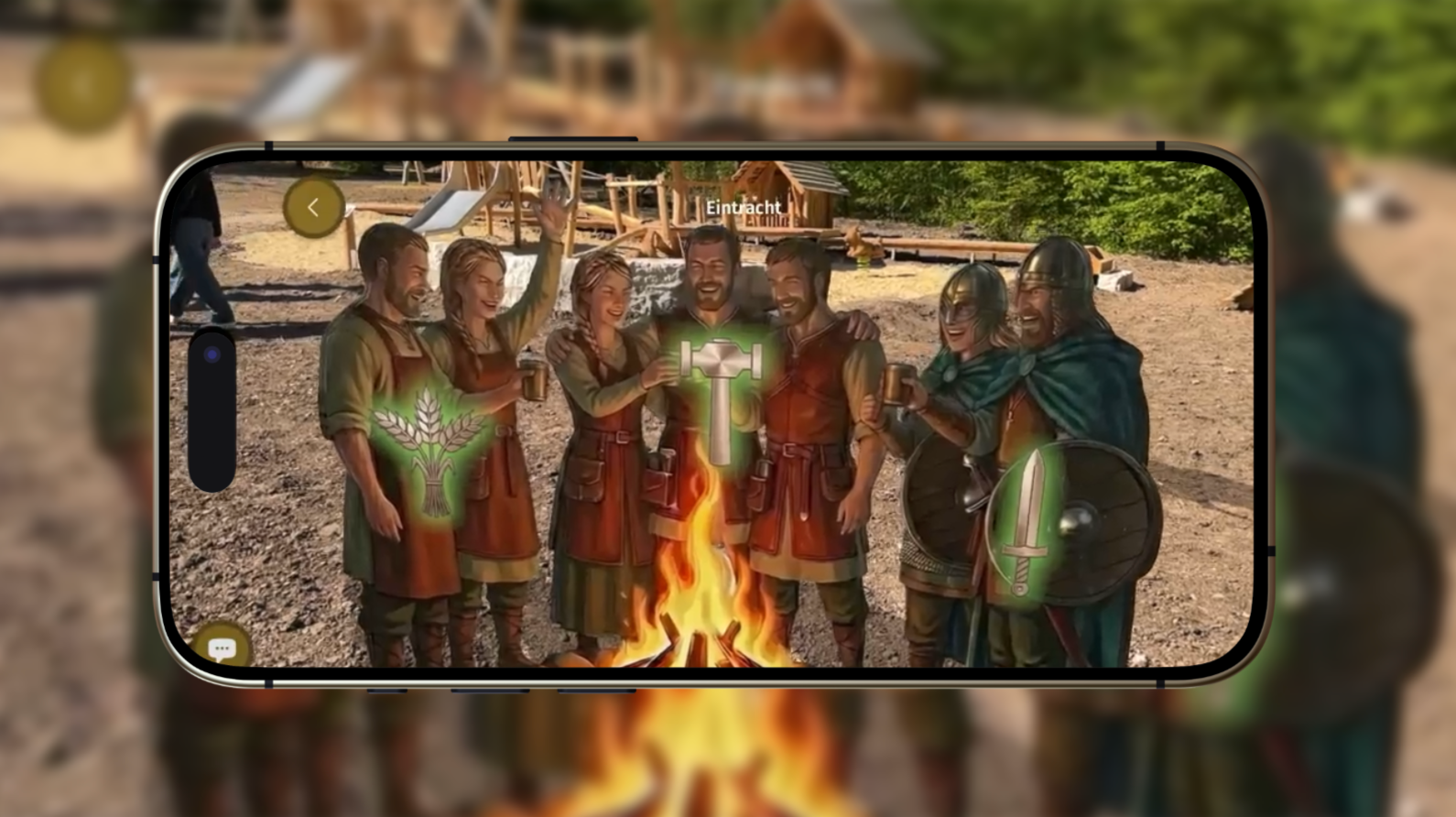
To ensure high engagement, the narrative is supported by gamified elements that vary by difficulty level. For those on the "Druiden Gelehrter" (Druid Scholar) tour, the tasks require a deeper understanding of the Celtic world. At the "Eintracht" (Unity) station, for instance, visitors must resolve a conflict within a virtual longhouse. To restore unity to the community, users must identify and provide the correct historical tools to various villagers, moving beyond simple observation to active problem-solving. Successfully completing these tasks earns the user a digital medallion. Once all four are collected, they merge into a final "Guardian Seal," providing a clear objective and a sense of progression.
The Launch: Bringing the Vision to Life
On April 26th, the ZAUBAR team had the privilege of attending the official opening of the Marswald Forest experience. It was a significant milestone to see our vision for the Steigerwald finally come to life in the hands of the community. Watching the first "Guardians" navigate the trails, interact with Marovidus, and unlock their medallions in the forest clearing was a profound reminder of the project's impact. The event brought together our municipal partners and local families, marking the successful transition of the Marswald from a technical concept into a digital landmark.
What ZAUBAR built to make it possible
Behind the scenes, ZAUBAR developed a multi-station, location-based AR experience designed to run long-term across the forest grounds. Content is delivered through the Marswald app and the ZAUBAR AR platform, which handle the 3D reconstructions, animated avatars, audio narration, and interactive logic. AR scenes are anchored using visual positioning and lightweight triggers so that the right content appears at the right trail marker, clearing, or historic landmark reliably, day after day.
Accessibility and flexibility were central to the brief. The experience runs on visitors’ own mobile devices, featuring localized content with audio and subtitles. The municipal team can update content and tweak details through ZAUBAR’s backend without rebuilding the app, turning the AR layer into an ongoing storytelling tool rather than a one-off showpiece. Inclusion was prioritized through specialized "Static AR" modes, allowing the magic of the Knetzberge to be accessed by users with limited mobility who may not be able to navigate the uneven forest terrain.
Why Spatial AR is Essential for Heritage
"Guardians of the Mars Forest" addresses a common challenge for archaeological sites: the "invisibility" of the past. Since most Celtic structures on the Knetzberge are no longer standing, AR provides a way to reconstruct these sites at a 1:1 scale in their original locations.
By allowing visitors to see reconstructed history while standing on the actual ground where it happened, the project makes Steigerwald's heritage tangible. By combining authentic archaeology with interactive gameplay and digital rewards, it bridges the gap between a traditional museum visit and a modern outdoor activity, ensuring that regional history remains relevant to a digital-native audience.
The trail is officially open and ready for discovery. We invite you to grab your smartphone, head out to the Steigerwald, and experience this new layer of regional history for yourself. You can plan your route directly via Google Maps here: Marswaldspielplatz Knetzgau.
We look forward to seeing you on the trail!



.svg)
.svg)
.svg)
.svg)

%201.svg)

.webp)


