

.webp)


.svg)

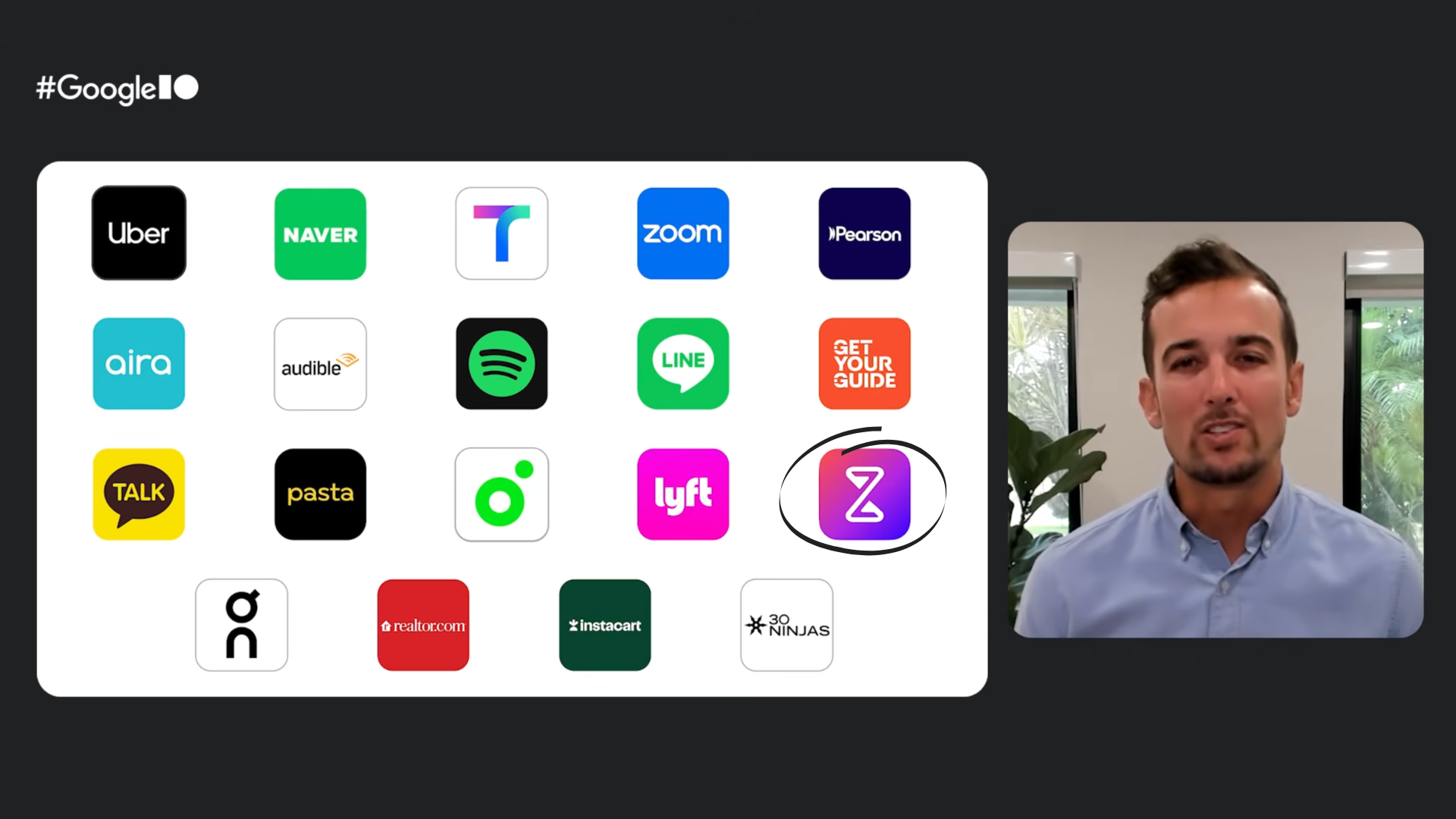
Google I/O 2026 introduced key updates for the spatial computing ecosystem, specifically during the session “The latest in Android XR.” As part of the presentation, Google highlighted companies contributing to the emerging Android XR ecosystem, with ZAUBAR appearing in the Android XR ecosystem context alongside other well-known platforms.
We are grateful for this visibility and the opportunity to share our work within the Android XR ecosystem as the platform continues to grow.
The Challenge: Moving Beyond Indoor AR
Early developments in spatial computing have frequently focused on indoor environments and localized setups. However, the real-world utility of augmented reality relies on deep contextual awareness out on the streets. For consumer brands, cultural institutions, and tour creators, deploying stable, outdoor AR at scale has historically been hindered by fragmented operating standards and hardware limitations.
ZAUBAR’s core focus is addressing this challenge by bringing historical, cultural, and commercial spaces to life using location-aware AI tours. For ZAUBAR, this platform shift matters because outdoor AR tours need stable glasses, reliable geospatial context, and a scalable developer platform.
The Solution: Scaling Location-Based AR with Android XR
Android XR’s growing maturity provides a clearer path to overcome these scaling challenges. By creating a common development foundation for next-generation XR devices, this ecosystem development is delivering the stability and technical foundation required for developers to build reliable AR applications for everyday use.
As part of this emerging ecosystem, ZAUBAR is aligning its development roadmap with upcoming software standards:
- Geospatial AI Integration: We are optimizing our Geospatial AI agents — which manage location-based memory and context-aware narration — to run natively and efficiently within the Android XR environment.
- Streamlining Creator Workflows: The latest Android XR updates also point toward easier creation, testing, and distribution of immersive content. This will support creators looking to build and deploy location-based immersive tours seamlessly.
The Impact: The Future of Immersive Storytelling
The tools and infrastructure presented by the Android XR team — including Stevan Silva, Yasmine Evjen, and Elijah Taylor — mark a practical step forward for the entire XR community. By refining the capabilities of immersive content development, this ecosystem development helps support meaningful, location-based digital experiences.
We want to extend our sincere thanks to the Android XR team and the broader Google team for a fantastic session and for building the foundational infrastructure the ecosystem needs to grow. We look forward to sharing more about how ZAUBAR is bringing location-aware AI tours to Android XR devices.



.svg)
.svg)
.svg)
.svg)

%201.svg)

.webp)


